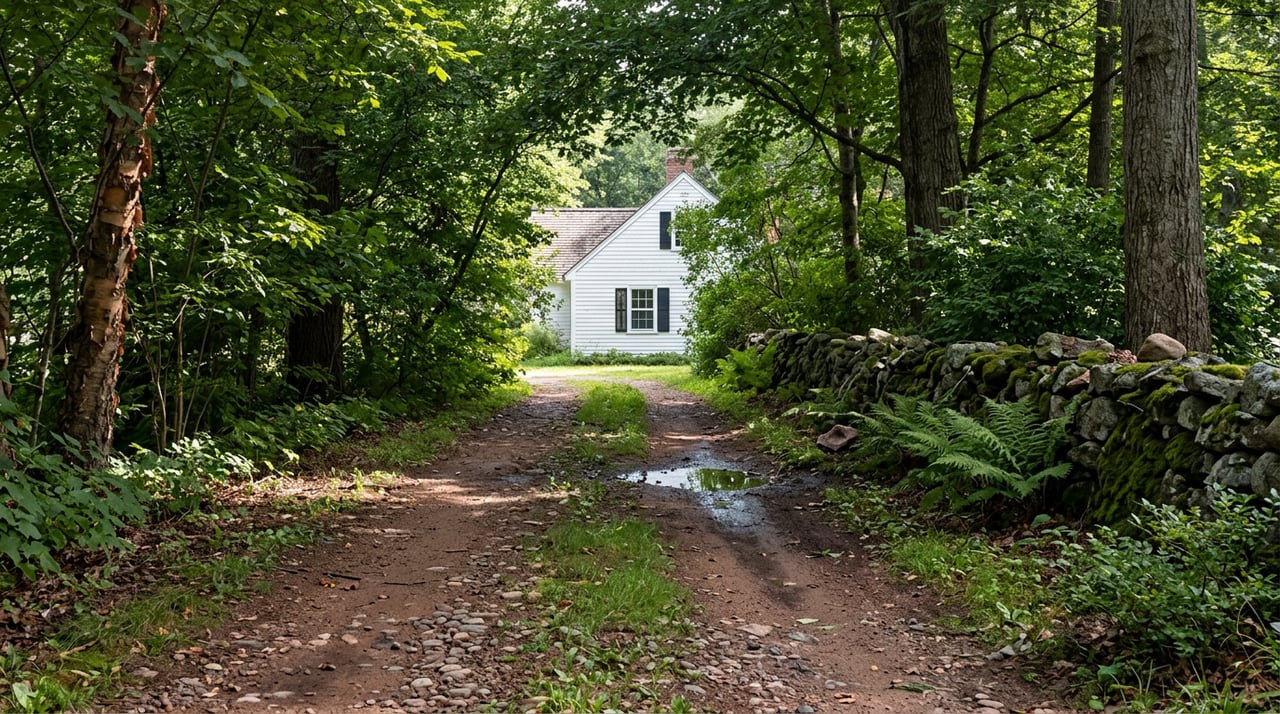
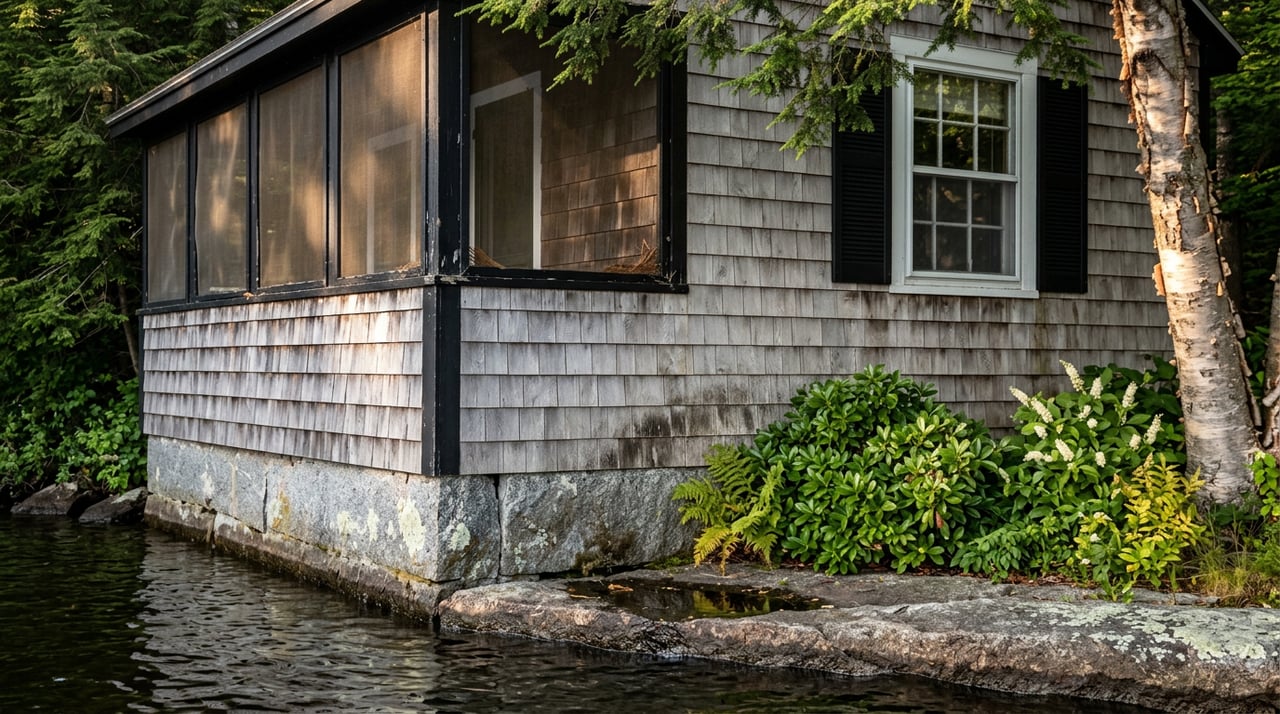
A buyer under contract on a Squam Lake camp in Sandwich assumes the septic inspection works the way it does everywhere else in New Hampshire: hire someone, wait for a report, move on. Then their agent mentions a second professional, a second invoice, and a second set of test pits dug next to the leach field. The buyer wants to know why one system needs two people to sign off on it.
The answer sits in a single date buried in state law: September 1, 1989. If the septic system serving a Squam Lake camp was approved before that date, or was never formally approved at all, New Hampshire now requires more than a standard evaluation before the property can change hands. And on a lake where family camps have passed down through generations rather than trading hands on the open market, that 1989 line catches a lot more Sandwich shoreline than most buyers expect.
The Law Changed. Most People Haven't Caught Up.
Until September 1, 2024, the rule for waterfront septic systems in New Hampshire put the work on the seller. Before listing, an owner completed what was called a waterfront site assessment, a document that told a buyer the lot's loading capacity and whether the system had state approval. It did not tell anyone whether the system actually worked.
That changed with RSA 485-A:39. The site assessment requirement is gone. In its place, any developed waterfront property with a septic system where any part sits within 250 feet of the reference line, meaning the high-water mark of a lake or pond larger than 10 acres, now requires the buyer to hire a New Hampshire-licensed septic evaluator before the transfer closes, at the buyer's expense. Squam Lake covers 6,791 acres and Little Squam another 408, so essentially every developed lot on Sandwich's stretch of shoreline falls inside that threshold.
The shift matters because it moves the cost and the timeline onto the person least familiar with the property. A seller who has owned a camp for decades knows its history. A buyer closing on their first Squam Lake purchase is starting from zero, on a deadline, with a professional they had to find and hire themselves.
Why Sandwich's Shoreline Carries More of This Risk
Squam Lake has spent a century being the lake that resists change. The shoreline is not lined wall to wall with cottages the way parts of Winnipesaukee are. Large family estates and open shoreline dominate instead, in part because miles of the lake's edge sit under conservation protection that will never be built on. Families who bought here decades ago tend to keep buying here, generation after generation, rather than selling into the open market.
That pattern is visible in how Sandwich properties get marketed. Listings routinely describe camps as having been in the same family for decades, or offered for the first time in 45 years, or built in the late 1800s and largely untouched since. Even Rockywold Deephaven Camps, the well-known Squam Lake compound, still operates cottages built in the early 1900s that have kept their character rather than being modernized.
That is exactly the profile the new law was built around. A camp that has changed hands once or twice since the 1970s is far more likely to be running on a septic system installed before anyone had to file state paperwork for it, or approved back when the standards were looser. For those systems, the evaluator alone is not enough.
The Two-Professional Problem
If a Squam Lake camp's septic system was never approved by the state, or was approved before September 1, 1989, the buyer must also hire a state-permitted septic system designer, separate from the evaluator, to determine whether the system is failing. That designer's job is specific: excavate a test pit beside the existing effluent disposal area and measure its elevation against the seasonal high-water table. That measurement, not a visual walkthrough, is what determines whether the system passes or fails under the new rule.
This is the detail that surprises buyers. A standard home inspector does not do this. A general septic pumping company does not do this. It requires a specific state credential, and on a lake where an unusually high share of camps predate 1989, a large number of Sandwich transactions will need both professionals rather than one.
Budget accordingly. A standard septic evaluation in New Hampshire typically runs a few hundred dollars. The designer's test-pit review adds to that. Against those costs, the number that actually matters is the downside: New Hampshire's environmental agency has pegged full replacement of a failed system at $25,000 or more, and other estimates for Lakes Region replacements run from $15,000 into the tens of thousands, depending on soil and site conditions. The evaluation and the designer's review are cheap by comparison. Skipping either one is not.
If the System Fails, the Sale Still Closes
Here is the part that changes how buyers should think about negotiating, not just budgeting. A failing evaluation does not stop the sale. New Hampshire's law does not give either party the right to walk away automatically just because the septic system shows signs of failure.
What it does instead is start a clock. Once an evaluator or designer flags failure, the buyer has 180 days after the property transfers to repair or replace the system, and must notify the state and the local health officer of the plan. The buyer and seller are free to negotiate who pays for that repair as part of the deal itself, but the obligation to fix it becomes the buyer's the moment the deed records.
There is one way around the evaluation entirely: a buyer can commit upfront to replacing or repairing the system within 180 days of transfer, skip the evaluation step, and simply notify the state and local health officer of that intent before closing. For a buyer already planning a teardown or major renovation of an older Squam camp, that can be the faster path.
Building This Into an Offer
The practical fix for all of this is timeline, not luck. A few things worth doing before writing an offer on Squam Lake waterfront in Sandwich:
- Ask the seller directly whether the existing septic system has state approval, and if so, from what year. If it predates September 1, 1989, plan for the designer step from day one rather than discovering it mid-inspection period.
- Ask whether the seller already has a septic evaluation on file. A seller's evaluation completed within the prior 180 days can be accepted by the buyer in writing instead of commissioning a new one, which saves both time and money.
- Build inspection contingency windows that account for two professionals, not one, since a designer's test-pit review typically cannot happen the same week as the evaluator's walkthrough.
- Get comfortable with the idea that a failing result is a negotiating point, not a dealbreaker. The 180-day clock gives both sides room to work out who covers the repair.
What This Means If You're Selling
The law puts the evaluation obligation on the buyer, but that does not mean sellers are off the hook entirely. A separate statute, RSA 485-A:37, still requires an owner to repair or replace a septic system once officially notified of failure by a permitted designer or local health officer, whether or not a sale is happening. If a buyer walks away after an evaluation turns up bad news, the seller can still be on the hook to fix it before trying again with the next buyer.
For sellers of older Squam Lake camps in Sandwich, the smartest move is often to commission an evaluation proactively before listing. It will not remove the buyer's legal obligation to hire their own, but a clean report in hand, especially one less than 180 days old that a buyer can formally accept, removes a major point of friction and keeps a deal moving instead of stalling in the inspection period.
A Few Questions Worth Answering Directly
Does this apply to every home in Sandwich, or just Squam Lake waterfront? Only developed waterfront property where part of the septic system sits within 250 feet of the reference line of a lake over 10 acres, a coastal water, or a larger river. A home a mile inland is not affected. A camp on Squam or Little Squam almost certainly is.
If the system was replaced recently, do I still need an evaluation? Yes. The requirement to hire an evaluator applies regardless of the system's age whenever the property transfers. What changes with a newer, state-approved system is that the additional designer review, triggered only by pre-1989 approval or no approval at all, likely does not apply.
Can a failing evaluation stop my purchase? No. The sale is not automatically blocked. It does trigger a mandatory 180-day window after closing to repair or replace the system, along with notification to the state and local health officer.
Squam Lake rewards patience, and this is one more place where that holds true. A camp with decades of family history behind it is exactly the kind of property this law was written for, and knowing that before an offer goes in is worth more than finding out during the inspection period.
If you are weighing a Squam Lake purchase in Sandwich, or getting an older family camp ready to list, Meredith Landing can walk you through what a specific property's septic history means for your timeline and your offer. Let us help you find your next landing spot.