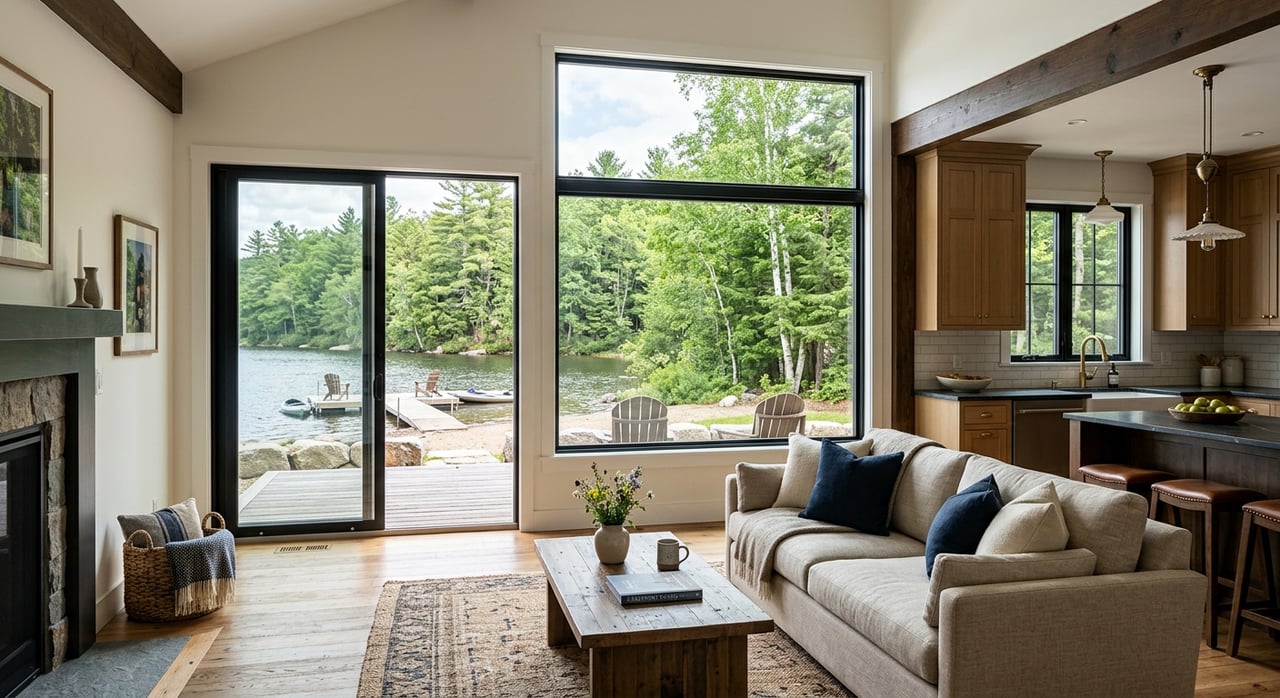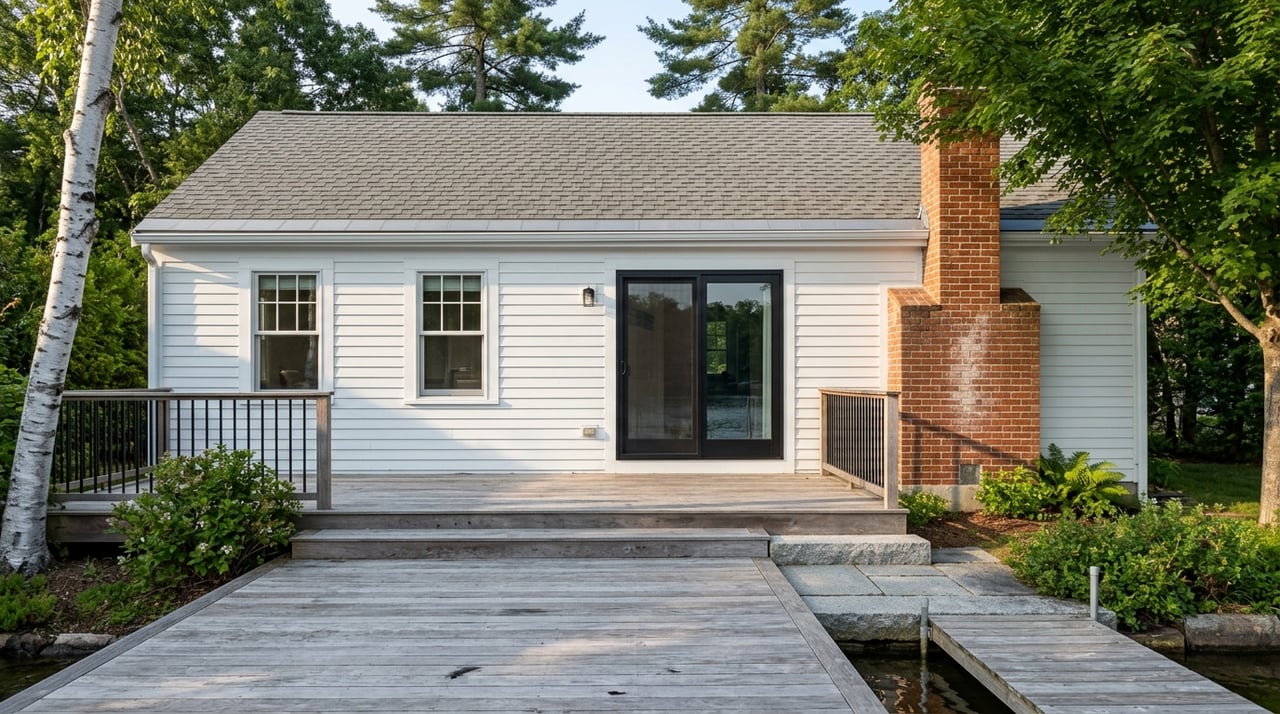
Thinking about buying a home in Meredith while living out of state? It can be exciting, but it can also feel hard to judge a property, a shoreline, or a closing timeline from far away. The good news is that with the right plan, you can make a smart move from a distance and avoid common surprises. In this guide, you’ll learn how to approach showings, due diligence, waterfront rules, and closing logistics in Meredith with more confidence. Let’s dive in.
Why Meredith takes extra planning
Meredith is not a one-size-fits-all market. Many properties are shaped by lake access, shoreline rules, utility details, and parcel-specific conditions that can affect how you use the home now and in the future.
That matters even more when you are buying from out of state. A home can look perfect online, but your real decision may come down to shoreline setbacks, septic timing, water source, docking limits, or whether part of the parcel falls in a special overlay district.
Meredith also has several layers of local and state regulation that can affect waterfront ownership. The town’s Shoreline District includes frontage on Lakes Winnipesaukee, Winnisquam, Wicwas, Waukewan, and Pemigewasset, along with all town islands, and it generally extends about 300 feet inland unless mapped otherwise.
Start with a remote-first search
If you are house hunting from another state, your first goal is not to see everything. It is to narrow your options fast and focus your travel on the homes most worth seeing in person.
Virtual tours and live video walk-throughs can help you do that. They are especially useful in a market like Meredith, where waterfront access, shoreland condition, and site layout can matter just as much as interior finishes.
A practical approach is to create a short list from online and video showings, then plan one focused in-person trip for your top choices. That gives you the chance to compare properties side by side and evaluate the things you cannot fully understand on a screen.
Plan one efficient in-person trip
A well-planned visit can save you time, money, and stress. Instead of making multiple scattered trips, many out-of-state buyers benefit from one concentrated visit built around their strongest options.
During that trip, you can look beyond the home itself. You can assess shoreline condition, access points, lot layout, road approach, and the surrounding setting in real time.
If you think you may need to handle inspections or even closing-related appointments on the same trip, early coordination matters. It helps to line up your lender and title company in advance so your travel window works with the transaction timeline.
Look closely at waterfront rules
If you are considering a waterfront or near-water property, Meredith’s local rules deserve close attention. These rules can affect additions, accessory structures, docks, boathouses, and site work.
In Meredith’s Shoreline District, waterfront lots have a 65-foot front setback from the shoreline. Boathouses require special-exception review, only one boathouse is allowed per lot, and if a boathouse project alters or dredges the natural shoreline, an erosion-control plan prepared by a licensed engineer is required before zoning review.
The town also requires building permits for work in flood-prone areas, including docks, boathouses, and other shoreline structures. For an out-of-state buyer, this is a reminder to confirm what is existing, what is permitted, and what may be difficult to change later.
Understand state shoreland limits too
Town rules are only part of the picture. New Hampshire shoreland rules may also apply, and in some cases they overlap with or add to local requirements.
According to NHDES, protected shoreland generally includes land within 250 feet of public waters. Its summary lists a 50-foot primary-structure setback, a 20-foot accessory-structure setback, and at least a 75-foot septic setback for new systems, while also noting that municipalities can be more restrictive.
That last point is important. A property that seems simple on paper may still have meaningful use limits because local standards can go beyond the state baseline.
Pay special attention to Lake Waukewan
Lake Waukewan calls for extra care during due diligence. Meredith created a Lake Waukewan Watershed Overlay District to protect the town’s drinking-water source and to prevent water-quality degradation in the watershed.
If a property is in that watershed, confirm whether the parcel is fully or only partially affected. That can shape what you may be able to do with improvements, drainage, grading, or other site work.
For remote buyers, this is a good example of why local review matters. A listing may show the home and lot clearly, but zoning overlays are not always obvious from photos alone.
Verify water, sewer, or well details
Utilities in Meredith are often parcel-specific, especially around the lakes. It is smart to confirm early whether the property is served by public water, public sewer, a private well, an individual sewage disposal system, or some combination.
Meredith’s water and sewer department says it services 1,367 customers, and water and sewer bills are issued quarterly to the property owner of record. That means utility structure and ongoing billing are worth understanding before you close.
If the home has a private well, testing should be part of your inspection period. NHDES recommends private well testing during the contract inspection window, and its suggested panel includes bacteria, arsenic, nitrate or nitrite, lead, radon, and other parameters depending on site conditions.
Know the new septic timing for waterfront transfers
For waterfront purchases, septic review is especially important right now. NHDES says that as of September 1, 2024, transfers of developed waterfront properties served by an individual sewage disposal system in protected shoreland changed so that the buyer arranges the evaluation.
That is a major shift for out-of-state buyers because it affects both timing and responsibility. If a system fails, replacement may be required within 180 days of transfer.
In practical terms, this means you should build septic planning into your timeline from the start. Waiting until the last minute can create avoidable stress in an already time-sensitive transaction.
Budget for costs beyond the price
When you are buying from out of state, your budget needs to cover more than down payment and moving expenses. Closing costs, transfer tax, utilities, and ongoing ownership costs all deserve a place in your numbers.
CFPB says closing costs typically run about 2% to 5% of the purchase price. In New Hampshire, the real estate transfer tax is imposed on both buyer and seller at $0.75 per $100 of consideration.
Local taxes matter too. Meredith’s 2025 total tax rate is listed at $10.62 per $1,000 of assessed value, and water and sewer bills, where applicable, are issued quarterly to the owner of record.
Ask early about remote closing options
Many out-of-state buyers want to know if they have to return to New Hampshire to sign. In some cases, remote signing may be possible, but you should not assume it is automatic.
New Hampshire authorizes remote notarization, but the Secretary of State says the notary must be physically in New Hampshire. It also advises checking with the title company and lender before relying on remote notarization for a property transaction.
The takeaway is simple. If remote closing flexibility matters to you, bring it up early so your lender and closing team can confirm what is available for your specific purchase.
Be cautious with remote funds and wire instructions
Buying from another state often means more email, more document sharing, and more remote handling of funds. That convenience is helpful, but it also means you should be careful.
Mortgage closing scams are a real risk when wire instructions are handled remotely. Before sending funds, confirm instructions through a trusted, verified process with your closing professionals.
A little caution here can protect a very large investment. It is one of the simplest steps you can take to keep your purchase on track.
If you may rent the property, check local rules
Some buyers plan to use a Meredith property as a second home and rent it at certain times of year. If that is part of your plan, local rules should be reviewed before you buy.
Meredith regulates short-term rentals by special exception in all districts except the Business and Industry District. Owners must obtain a town license and pass a fire-department inspection, and rentals in buildings constructed before January 1, 1978 require a Lead Safe Certificate.
This is another reason to match your property search to your intended use. A home that works well for personal enjoyment may have additional steps if you also want rental income.
A simple order of operations
When you are buying from out of state, the process tends to go more smoothly when you follow the right sequence. Meredith is a market where timing and coordination matter almost as much as the property itself.
Here is a practical framework:
- Use virtual tours and live video walk-throughs to narrow your list
- Plan one focused trip to see your top choices in person
- Review shoreline, zoning, and watershed details early
- Confirm water, sewer, well, and septic information for the specific parcel
- Schedule inspections and well or septic evaluations within the contract timeline
- Coordinate lender, title, and signing logistics as early as possible
- Verify carrying costs, tax expectations, and any rental-related requirements before closing
For many buyers, the biggest win is not moving faster. It is moving in the right order.
A Meredith purchase can be deeply rewarding, whether you are looking for a year-round home, a lake retreat, or a property with long-term lifestyle value. The key is combining local insight with a clear process so you can make decisions with confidence, even from miles away.
If you are starting your search and want practical guidance rooted in the Lakes Region, Bronwen Donnelly can help you find your next landing spot.
FAQs
What should an out-of-state buyer verify first in Meredith?
- Start by confirming the property’s location details, utility setup, waterfront status, and whether shoreland or watershed rules may affect the parcel.
How should an out-of-state buyer schedule home tours in Meredith?
- A smart approach is to use virtual tours and live video walk-throughs first, then schedule one focused in-person trip for the homes that make your final shortlist.
What waterfront rules matter when buying in Meredith?
- Meredith’s Shoreline District rules can affect setbacks, boathouses, shoreline work, and permits, and state shoreland rules may also apply depending on the parcel.
What septic rule affects waterfront buyers in Meredith?
- For certain developed waterfront properties in protected shoreland served by an individual sewage disposal system, the buyer now arranges the evaluation, and failing systems may need replacement within 180 days of transfer.
Should an out-of-state buyer test a private well in Meredith?
- Yes. NHDES recommends testing a private well during the contract inspection period, with the test panel based on site conditions.
Can an out-of-state buyer close remotely on a Meredith home?
- Sometimes, but not always. New Hampshire allows remote notarization, yet the notary must be physically in New Hampshire and buyers should confirm details with the title company and lender early.
What should a buyer know about short-term rentals in Meredith?
- Short-term rentals generally require special exception approval outside the Business and Industry District, along with a town license, a fire inspection, and in some cases a Lead Safe Certificate.