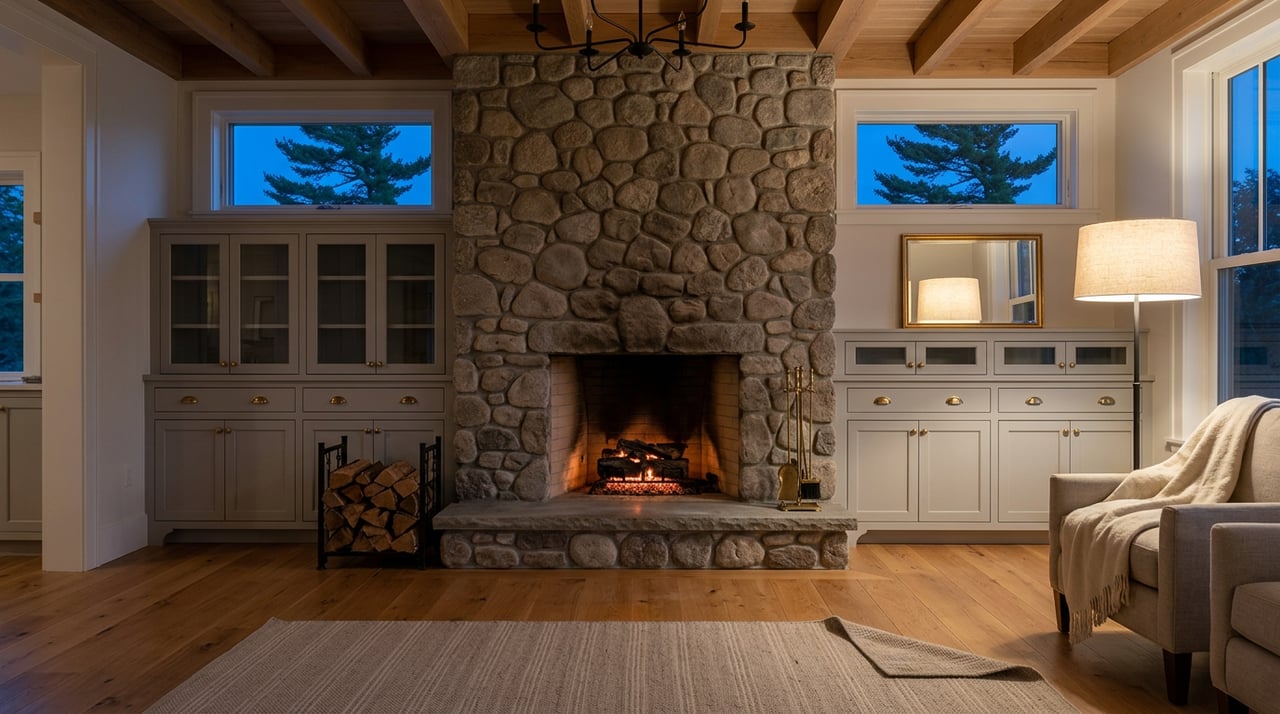
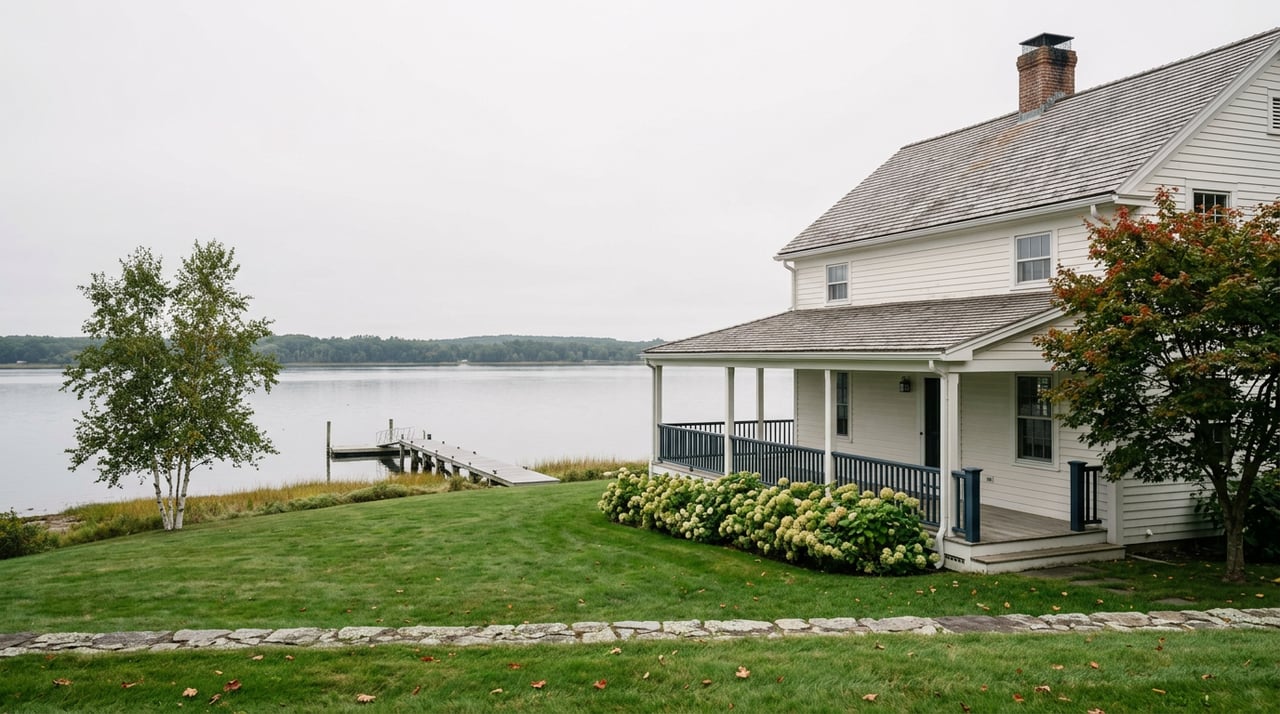
You are looking at a listing on Meredith Neck. The photos show a dock, a fire pit, a calendar of Airbnb reviews going back three years, and a income history the seller's agent is happy to walk you through. It reads like a business you can simply step into. Sign the deed, keep the listing live, collect the same nights.
That is not quite how Meredith's short-term rental rules work. The town's zoning ordinance treats the special exception that allows a property to operate as a rental as something tied to the land, but the operating terms, the night cap, the occupancy limits, and the inspection schedule are tied to who is living there and how. Buy the house planning to run it differently than the seller did, and the ceiling on what you're allowed to do can drop the moment you close.
Two Categories, Two Ceilings
Until March 2025, every short-term rental in Meredith operated under the same limit: 120 nights a year, regardless of whether the owner lived on the property or not. That changed when voters approved Warrant Article 5, 337 to 94, splitting rentals into two categories. An Owner in Residence, someone who lives in the home and rents rooms or the whole house while present, can still rent up to 120 cumulative days a year. An Owner Not in Residence, someone who owns the property but doesn't live there, is capped at 90 days.
The same warrant article also tied occupancy to bedroom count. The formula that came out of that vote allows two people per bedroom plus two additional guests, along with one vehicle per bedroom. A four-bedroom house works out differently than a two-bedroom cottage, and the math follows the bedrooms, not the buyer's plans for the space.
Here is the part that catches people who assume the seller's history transfers: the zoning board issues its approval based on the applicant in front of it, not the address in the abstract. If the seller lived there and rented under the 120-day owner-in-residence allowance, and you intend to keep it as a second home you visit twice a summer, you are the owner not in residence the ordinance is describing. The 90-day cap is yours, not the seller's 120.
What the Board Actually Approved This Summer
The Meredith Zoning Board of Adjustment met on June 11, 2026, and the case list from that meeting shows how granular this gets. Brian Kramer's application at 59 Stoney Brook Road was approved with a maximum of 10 overnight guests and 4 vehicles. Dan and Renee Charest's two units at 16A and 16B Lake Shore Drive were each capped at 6 overnight guests and 2 vehicles, with trash handled through Waste Management. Erin and Matthew O'Brien's property on Meredith Neck Road came in smaller still, at 6 overnight guests and 2 vehicles, with a lead-safety certification required under state law because of the home's age. Cooperman Fourel Farm LLC's application on Carleton Road carried a 10-guest, 4-vehicle allowance with trash handled by the farm manager and Casella.
No two of these approvals read the same way. Each carries its own occupancy math, its own trash arrangement, its own inspection requirement. That same meeting also granted a waterfront setback variance for construction on Two Mile Island, a reminder that island and shoreline projects answer to state and federal permitting on top of anything the town approves. The board also spent time discussing a new Zoning Amendment Working Group, a five to seven person group pulling in Planning Board and Conservation Commission members to vet future bylaw changes before they reach a formal hearing. The rules that apply to a Meredith rental this month are not necessarily the rules that will apply in twelve.
A special exception can survive a change of ownership. It rarely survives a change of intention.
The Grandfather Clause Has Already Been Tested Once
Before 2022, Meredith didn't require a special exception for short-term rentals at all. When the town adopted that requirement, it created an obvious question: what happens to a rental that was already operating? The answer, in theory, is that it gets grandfathered in as an accessory use that predates the ordinance.
In practice, that answer has already been argued in front of the zoning board. A short-term rental on Black Cove, owned by Douglas and Allison Keach, came under dispute after a neighbor, Frank Marino, complained that the property was being run as a year-round commercial rental rather than a lightly-used vacation home. The town initially sued over the noncompliance, then settled after the Keaches provided documentation the town found sufficient to grandfather the use. Marino filed an administrative appeal, and the zoning board denied it, ruling that its authority was narrow: it could only determine whether short-term rental was an allowed accessory use before the 2022 ordinance took effect, not weigh in on whether the owners' account of how they actually used the home was accurate.
That distinction matters for anyone buying a Meredith property on the strength of a seller's claim that it is grandfathered. Grandfathering is a paper trail, not a verbal assurance, and it can be contested by a neighbor years after a sale closes. If you're relying on pre-2022 status to skip the special exception process, ask to see the documentation the town accepted, not just the seller's word that it exists.
Compliance Just Got Cheaper and More Documented at the Same Time
The Meredith Selectboard held a public hearing on August 10, 2026, and used it to ease part of the process. Two application requirements were dropped, and the annual license fee for owner-in-residence rentals was cut in half, from $400 to $200. Read on its own, that looks like the town loosening its grip.
Read alongside everything else moving through the zoning board this year, it looks more like a shift in where the friction lives. The fee went down, but the life-safety inspection by the fire department before any rental period begins did not go away. The lead-safety certification requirement for homes built before January 1, 1978 did not go away. The case-by-case conditions on trash management and access, the kind attached to nearly every approval from the June meeting, did not go away either. The town made it cheaper to hold the license. It did not make it faster or lighter to prove you're entitled to one.
What This Means If You're Under Contract
A few things worth confirming before you sign anything tied to rental income:
- Ask for the special exception case number and the written conditions attached to it, not just a verbal confirmation that one exists.
- Confirm whether the current approval is Owner in Residence or Owner Not in Residence, and be honest with yourself about which category you'll actually fall into.
- Check the date of the last fire department life-safety inspection. It has to happen before any rental period, not just once at approval.
- If the home was built before 1978, confirm the lead-safety certificate is current under RSA 130-A:5-d.
- Do not plan on renting an accessory dwelling unit nightly. Meredith's ordinance excludes ADUs from short-term rental use entirely, aside from licensed bed and breakfasts.
None of this means a Meredith rental is a bad purchase. Nearly half the town's housing stock is seasonal or recreational, which is exactly why the ordinance treats occupancy status as the hinge point it does. It just means the number on the listing sheet describes what the seller was allowed to do, not necessarily what you will be.
A few questions worth answering directly
Does a special exception transfer automatically when a property sells? The special exception itself generally runs with the property, but the annual license, the applicable night cap, and the life-safety inspection are tied to how the property is actually being occupied and operated. Confirm current status rather than assume the seller's terms carry forward.
Can I convert an ADU into a short-term rental to add income? No. Meredith's ordinance excludes accessory dwelling units from short-term rental use, with the narrow exception of a licensed bed and breakfast.
What happens if a neighbor disputes a rental's grandfathered status after I've bought the property? It can still go to the zoning board. As the Black Cove case showed, the board's role is limited to whether the use was legally allowed before the 2022 ordinance, not to settle disagreements about how the property has actually been used since.
If you're weighing a Meredith property with rental income in mind, the paperwork is worth more than the calendar screenshots. Meredith Landing can walk you through what a specific address is actually approved to do before you write an offer. Let us help you find your next landing spot.